
First Flag Hoisting in Muvkhetpada, Satpuda After Independence
Translated from Marathi by AI · Read the original
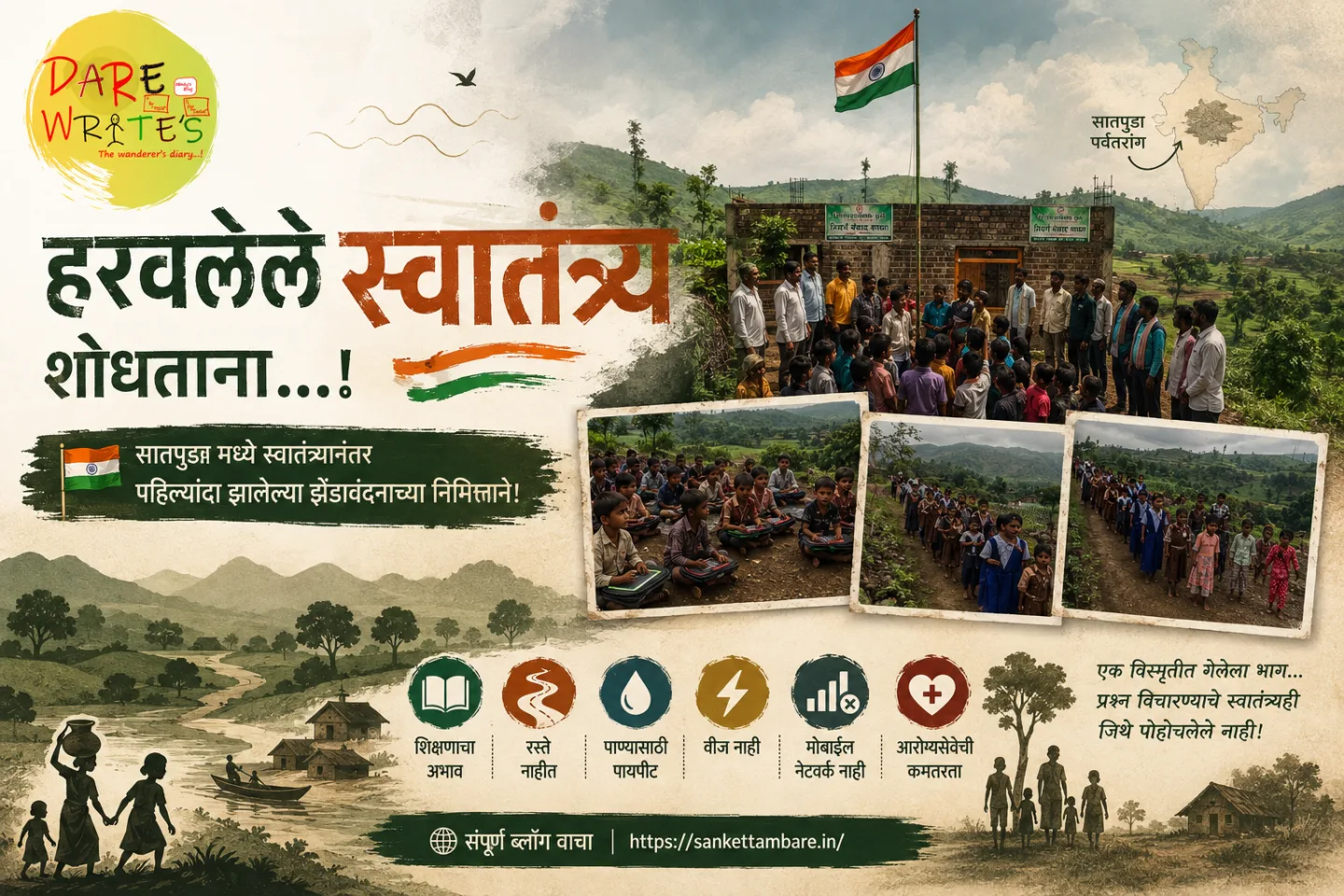
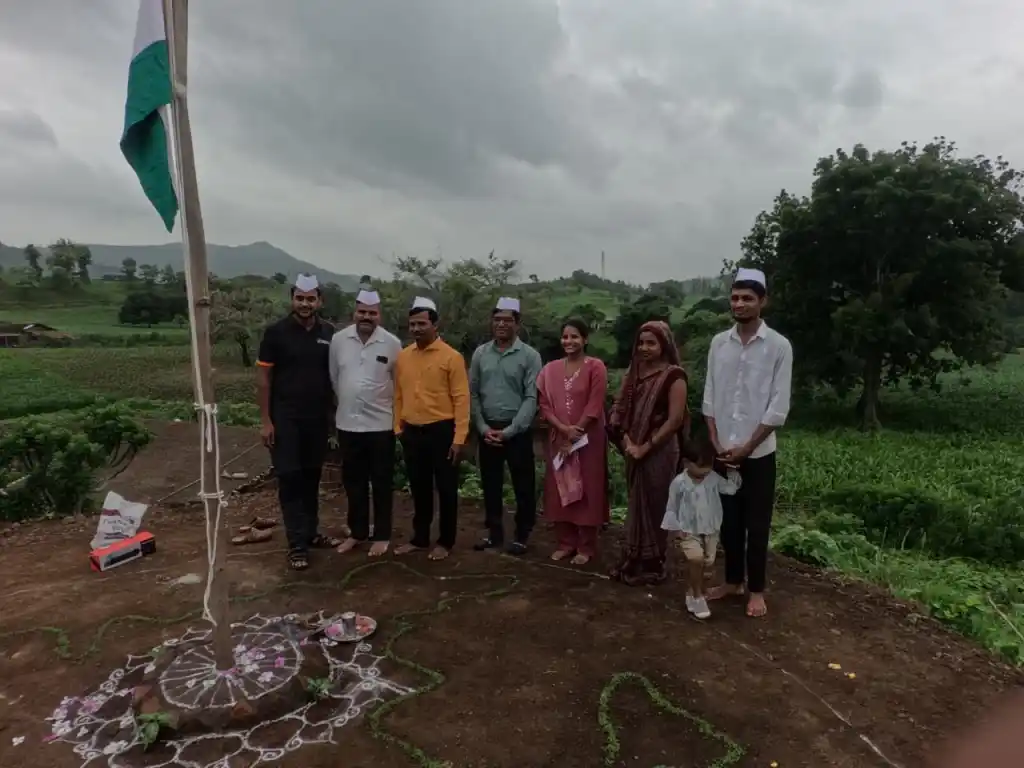
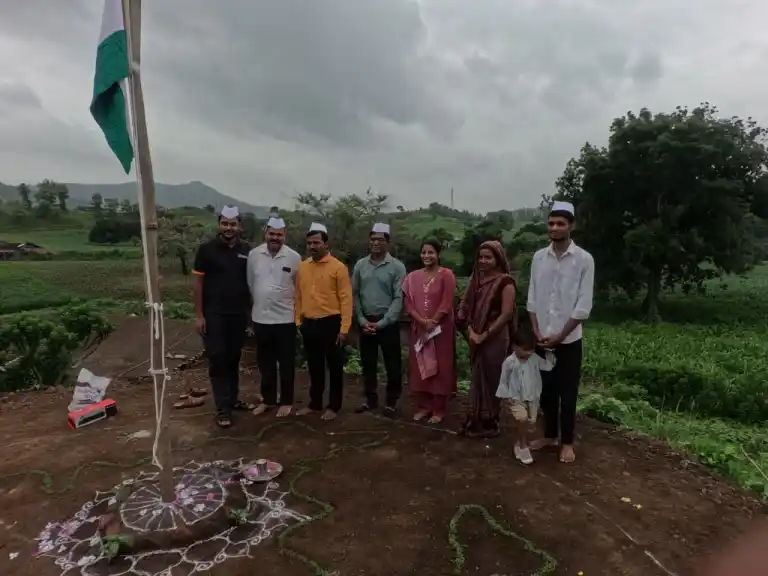
On the occasion of the flag hoisting held for the first time in the Satpuda after independence! This year India celebrated its 80th Independence Day. There was great enthusiasm everywhere across the country. Among such developing countries of ours, there is also a part where Independence Day had never been celebrated until now. After such a long period, when the tricolor was unfurled there, the expression on the faces of the people there was certainly something like, this is my country and my basic needs will surely be fulfilled here in the coming time! Almost all basic amenities like roads, electricity, mobile network, water, village administration, gram panchayat, health system are not there. Due to lack of education, there is also a strong possibility that the next generation will get stuck in the same cycle! This is the story of Muvkhetpada in Dhadgaon taluka of Nandurbar district! Independence Day was celebrated for the first time after independence in this place this year.
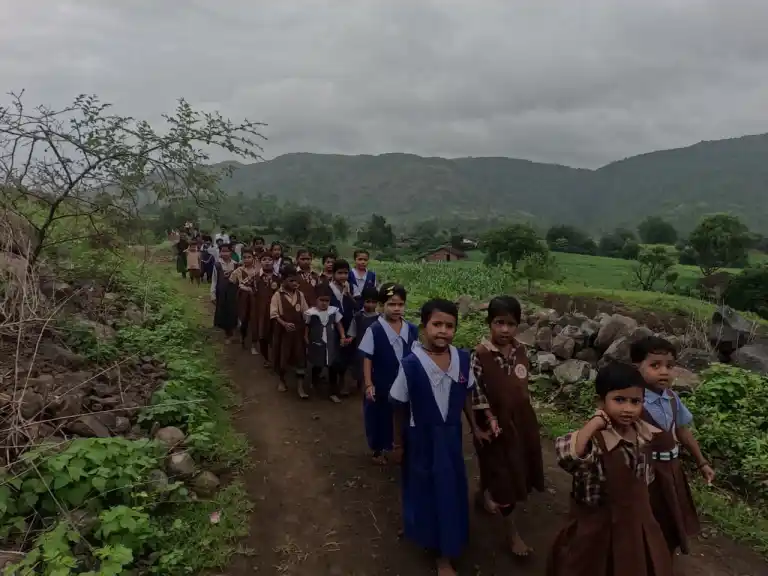
The current world is that of Gen Alpha. Following the protests by CJP in Delhi, students in all states are taking to the streets for basic rights. But at the same time in Maharashtra, there is a part where students and parents are still not aware of their basic right to education. Protests are a very distant thing here!
Speaking about the Satpuda, it is a beautiful mountain range in Maharashtra. Settled among hills and valleys, the people here are still preserving their rich, cultural and traditional heritage. Here on the banks of the Narmada, many villages are settled. There is not even a road to go to some villages. In some places one has to climb high mountains, while in some places one has to go by boat. Average annual income is only twenty-five thousand rupees. 90% of people migrate for labor. Almost 98% of houses do not have a toilet. 57% of children from families with children do not go to school. 83% of people live in kachcha mud houses. 95% of family heads are illiterate. All information about this survey is available here.
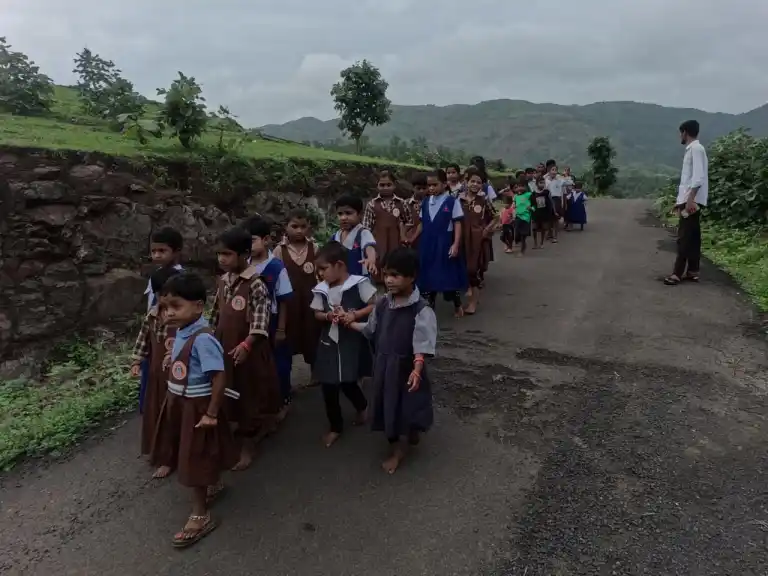
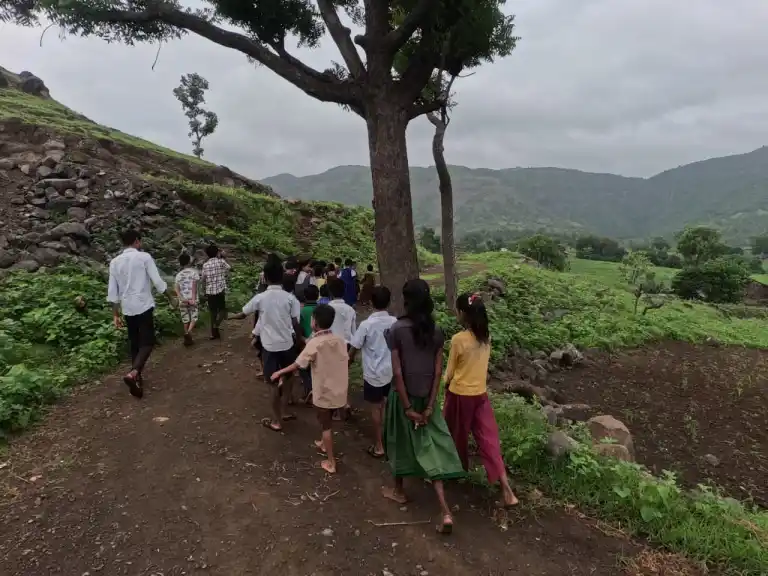
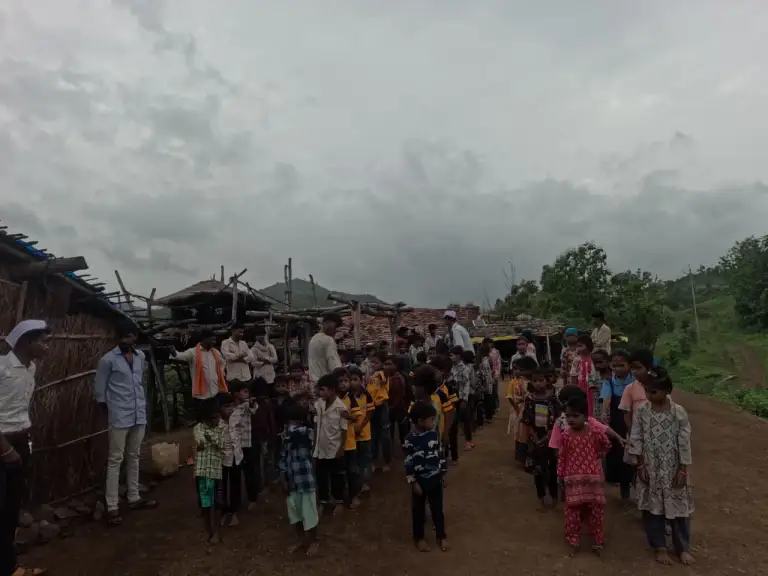
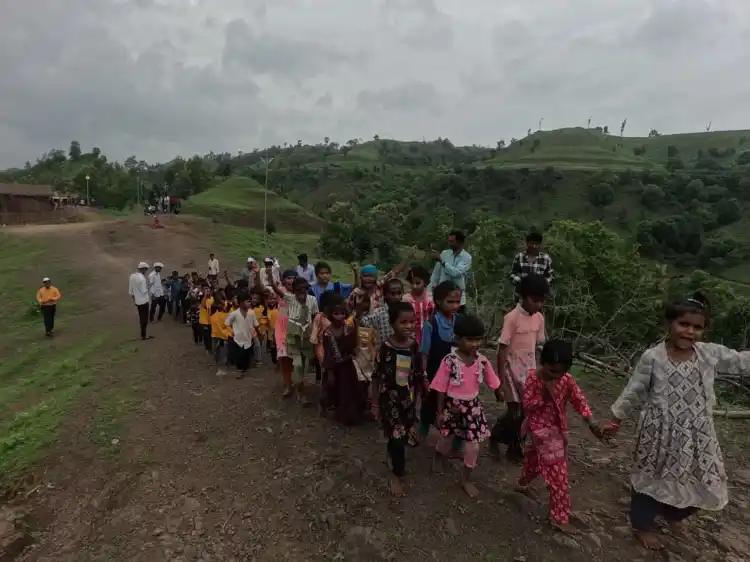
Overwhelmed little children were chanting slogans like "Bharat Mata Ki Jai", "Vande Mataram", "Inquilab Zindabad". The Satpuda echoed with these slogans. Peeking from small huts, the people there were looking at all this today, perhaps with a similar feeling as to what is this new thing. Some of them were standing on the road watching the dawn of new freedom. There were question marks on their faces, but at least now the naive expectation must have arisen in their minds that our many basic needs like road, water, electricity, and mobile network will soon be fulfilled. The situation was quite ironic indeed. Neither the government was aware of their existence, nor had any idea of their needs. For now, the expectation is just that someone, someday, a sensitive official will come, fight with this system and light the lamp of development here!
Basic needs include food, clothing, shelter, education and internet. Be it drought or a good season, the people here eat whatever grows there. Then that mainly includes maize, lentils, bajra and rice. Naturally, malnutrition worsened due to vitamin deficiency is a big problem. Stunted growth of young children should be called a visual symbol of this.
A hut built from naturally available materials, floor plastered with cow dung, this is that shelter. Then living in the forest naturally included the easy movement of snakes and scorpions in the house. Since there is almost no such thing as a hospital, the rate of deaths due to snakebites is high here. Once a year around Holi a fair is held there. It is called Bhongra Bazaar. From crevices and mountain ranges, all tribal brothers and sisters come to this place. This atmosphere filled with shopping for new clothes for the new year, festivals, and celebrations should truly be called pleasant. The new clothes bought then are the clothing purchases for the whole year for these children. Life spent in a wattle and daub hut, lean bodies, three-four generations in the same house, small children playing outside, life there is somewhat like this!
Now the main question is education. In the mountain ranges below Toranmal, schools existed on paper, there were children on paper, there was their attendance, there was teachers' salary, but on the ground there was no school, no students, no teachers! Until about five-six years ago, there were no roads to come here and the citizens here did not even have vehicles. Then how would the existence of schools survive in such a place? Even today thousands of children are out of school, the school in Toranmal has a capacity of 1,600 children, there too it must be more than that. This picture was never highlighted in the developed India of 2020 of Dr. A.P.J. Abdul Kalam's dream, in fact, are we even aware that it is the same today, this is the real question?
It is said that education is the tigress's milk. Progress happens because of education. The new generation takes that family on the path of development. Children go to cities. They live there and achieve financial stability and in this way pave the way for the development of that village. Naturally, when schools close down, boys and girls are bound to be out of school. A main school was built in Toranmal for all the children here, but whether all these students will fit in it and whether and how they will reach there is a fundamental question.
Another reason for children not enjoying school is the difference in the original spoken language. Mostly Pavri language is spoken here. Although the script is Devanagari, there is a big gap between Marathi and Pavri languages. Because basic words are different and there is so much disparity in lifestyle, the children here do not enjoy school. Staying there is another separate and huge challenge beyond that.
Water is a basic need, and we know the rate of water-borne diseases. This region is settled in the border area of Maharashtra and Madhya Pradesh, around the Narmada river. There are many rivers here. Examples of that include Jharkhal, Tapi. In summer, one has to wander through mountains and valleys for drinking water. In the rainy season, one has to find flowing water streams and bring water from there. Because of this, this responsibility falls on the women or girls of the family. Looking after small children at home, or doing other work, is why most girls drop out of school.
The health issue is a serious one. There is a health worker at Uddadya Pada, but she lives in Dhadgaon. Occasionally, once in a month or two, she comes here. Then at such times, for health issues, the people here try to go to the local vaidya and get treatment. Naturally, many people also die during that time. Seeing such a woman with a two to three day old baby, going towards the city with her young daughter, this question strongly arises: is this that developed India?
For the past few months, awareness has been growing in society about issues like education, roads, health. Many people are taking to the streets to solve the problem, asking questions to the government, protesting, and in some places trying to solve the problem at their own expense. Protests were happening earlier too, the issue was that neither the government nor the media paid that much attention to it!
As a conscious citizen, we are becoming aware of our rights. We are learning to ask questions to the system, but how many people are aware of the issues in this area. The freedom to ask questions has not even reached the people there. When we say We the People of India, it is intended to consider all Indians, are we doing that?’
Internet is a basic need like that. After Covid everything came online. School tuition, people's work, getting government papers, complaining about government establishments, all these tasks happen online these days. But if there is a mobile network, internet is a far cry. All these people are still far away from this most important thing of the 21st century, at last this is the truth.
In short, seasonal agriculture, lack of basic facilities, tramping for water, extreme poverty in every household, displacement for employment, all these factors result in the very low rate of school attendance here. Decreased rainfall due to climate change, because of this, even when September arrives, the low water in the rivers certainly hints at the food crisis that will arise in the future.
Now all this was about the problem, the main question is what is the solution? Creating awareness among the people there about this entire situation is certainly one way. Going to the people there, understanding their problems, identifying what things they need, and working on those things, Sandeep dada is doing this through Yung Foundation.
Around 2020, Sandeep Deore started working there through Yung Foundation. Talking to the people there, he started working on the subject of education. Nature communication schools were created. Educated children from there teach them basic arithmetic, alphabets, songs, poems in these schools. Today these schools run in more than ten tribal padas. More than four hundred boys and girls are studying there today. In a school in one such pada, the flag was hoisted for the first time this independence day. Actually this is certainly not a matter of pride, but while taking pride as a developing country, one feels regret that there is such a backward part in this country and it is still there.
Because of these schools, these local youth and villagers are learning to ask questions. They are questioning the system for which this part never even existed. Just this year electricity came to a tribal pada. The average annual income of the family there is 25000 to 30 thousand rupees. Only one or two bulbs run on electricity here, there is no TV, no fridge. But still if the electricity board is sending an electricity bill of five hundred, thousand, fifteen hundred rupees a month, where should they go to seek justice now? Especially if all these bills are being issued without taking a photo of the meter, the question is on what basis these bills were sent. The villagers are asking questions about this, taking advice on what to do. Gradually they are learning to fight with this system.
These people, who look happy and content on the surface, are joyful. They have no idea or imagination about the country's progress. They get a little information through the network available in scattered places. But in most places there is no network at all. What exactly would their idea of development be? They are living with the help of water obtained from mountain crevices in summer and from flowing streams at other times, minor farming, and whatever they find in nature.
The question is, has freedom reached them after 80 years? When will they get the freedom of education? When will they be able to live satisfyingly as a citizen? When will they get this lost freedom? If basic education is not available, how will the next generation get out of this dark need? There are countless questions. When will this country, the system, and other citizens of the country realize all this, that is a question indeed!
To know more about Sandeep Dada's work, you can visit Yung Foundation's Facebook page or website.