
“Amu Aakha Ek Se” – We Are All One
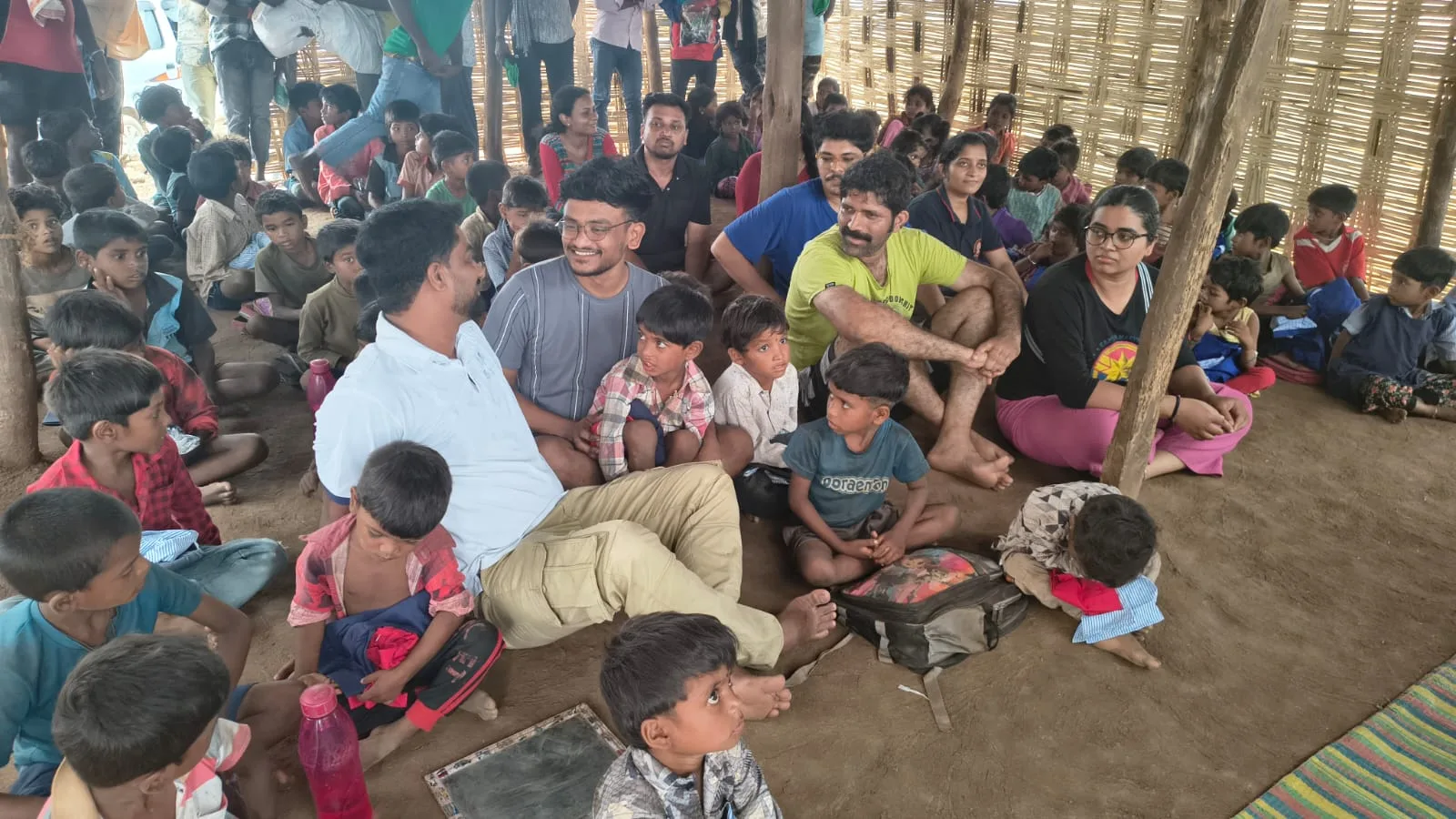
“Amu Aakha Ek Se” means “We are all one.” It is a phrase I learned during my three-day stay in Satpura, one of the most untouched and underdeveloped regions of Maharashtra. These four simple words carry a profound message for humanity—one that many of us living in so-called developed urban societies seem to have forgotten while fighting over religion, caste, language, states, and countless other divisions.
The people of this region worship Jal (water), Jangal (forest), and Jamin (land). Nature is their religion. Their lives revolve around protecting these three lifelines rather than following man-made divisions. It was a lesson that stayed with me long after the journey ended.
Although my trip lasted only from 26th June to 28th June, my mind is still wandering through those hills. I remember the endless greenery, the pristine river, the crystal-clear sky, and the fresh air untouched by pollution. More than the landscape, however, it is the people who continue to occupy my thoughts—the shy smiles, curious eyes of children, weathered faces of elders, and the quiet dignity with which they live despite having so little.
Every person I met carried a treasure of stories—stories filled with happiness, hardship, sacrifice, resilience, and hope.
This blog is about those people, the beautiful natural ecosystem, and our three days experinece of Udadya, Sandri, and Kudya, villages in Dhadgaon Taluka of Nandurbar district.
The Beginning of the Journey
Our primary objective was to distribute school supplies for a newly started school in one of the padas (hamlets) of Udadya village. However, we returned carrying something far more valuable than what we had taken with us—memories, lessons, and a renewed sense of purpose.
Our group consisted of thirteen members travelling in two vans:
Me
Pratik
Sandeep Dada (Founder of Yung Foundation)
Sanket
Ketaki
Lokesh
Suraj
Sonali Mausi
Nikhil
Krishna
Pritam
Mauli
Swapnil
We all gathered at Dhule, had tea at Krishna’s place, and then began our journey towards Satpura.
Udadya – Where Nature Still Breathes Freely
Udadya is located in Dhadgaon Taluka of Nandurbar district. The mighty Narmada River flows just about 1.5 kilometres from the village. After a short trek through fields and forests, we reached its banks. Across the river lay the neighbouring state of Madhya Pradesh.
The region is surrounded by hills with very limited roads. Walking and trekking remain the primary means of reaching neighbouring villages.
The forest was alive with magnificent trees such as Anjana, Sag (Teak) and Palash. The air was incredibly fresh, the river water crystal clear, and plastic waste was almost absent.
Among all the plants, one particularly caught my attention—the Anjana tree, a species known for its nutritional and medicinal importance.
Being an Ayurveda physician, I couldn’t stop observing the place through the eyes of a doctor. At first glance, I noticed signs of malnutrition, poor hygiene, skin diseases, and other preventable health issues. Yet I also realized that the solution to many of these problems was growing right in their own backyard.
The Anjana plant has immense potential. What is needed is awareness—teaching people how to identify it, which part should be used, how it should be prepared, and for which conditions it can be beneficial.
This realization gave birth to an idea for my next visit:
“औषध तुमच्या दारात” (Medicine at Your Doorstep).
I hope to begin a community health awareness initiative under this name.
The People
Most villagers do not speak Marathi or Hindi. Their primary language is Pawari, spoken by the Pawari tribal community.
Despite the gradual influence of urban life on the younger generation, the elders continue to preserve their traditions and culture with immense pride.
Every piece of clothing is called “Lugda.”
A girl is affectionately called “Suri”, a boy “Sura”, and husband and wife are lovingly referred to as “Lada-Ladu.”
What touched me most was not their language but their warmth.
Their faces glowed despite hardship. Their eyes carried hope despite uncertainty. Even with empty stomachs, they welcomed strangers with genuine smiles and open hearts.
Day One – A Journey into Simplicity
We reached Udadya around 3 p.m., exhausted and hungry.
The office of Yung Foundation was unlike any office I had seen before. Built entirely from bamboo in the shape of a traditional hut, it blended beautifully with nature.
When we arrived, a class was in progress. Small children sat quietly with slates in their hands, stealing curious glances at us. Their innocent expressions were unforgettable.
The school was managed by Sachin, a dedicated fellow working with the Foundation.
After unloading our luggage, we prepared a simple kachha chivda for lunch and rested for a while before heading towards the Narmada.
The trek itself was magical. We walked through farms before entering dense forests filled with Anjana, Teak and Palash trees. We heard peacocks calling from a distance and noticed the rocky path where waterfalls would come alive during the monsoon.
Before entering the forest stood two symbols of modern civilization—a hand pump and a mobile tower.
Then nature completely took over.
Reaching the river felt like discovering paradise.
The Narmada was calm, clean, and breathtakingly beautiful.
Some of us were non-swimmers, but with encouragement from the others, everyone enjoyed the water. Sonali Mausi, despite not knowing how to swim, quickly gained confidence and amazed all of us.
By the time we returned, darkness had completely covered the forest. Since there is no electricity in the village, the trail was illuminated only by moonlight and our torches.
On our way back we briefly encountered a snake, which quietly disappeared into the forest before we could even react.
Dinner that night was a delicious Khandeshi Khichadi, lovingly prepared by Sandeep Dada.
After dinner, we slept under an open sky overflowing with stars.
It was the perfect ending to our first day.
Day Two – Learning Beyond Classrooms
The next morning we visited another school located in a nearby pada in Sandri village.
We played with the children, sang songs, and stood together while singing the National Anthem.
That moment was deeply emotional.
We all sang the same anthem that I had sung throughout my school life, yet our lives were worlds apart in terms of opportunities and privileges.
Listening to those young voices gave me goosebumps.
It was in this school that I first heard the phrase:
“Amu Aakha Ek Se.”
“We are all one.”
Such a simple sentence, yet perhaps the greatest lesson of the entire journey.
After lunch, which included potato curry and chapatis prepared by Pratik and me (to everyone’s surprise and appreciation!), we travelled to Kudya village, where another school had started only six months earlier.
The trek to the school was difficult and uphill.
For us, it was an adventure.
For the children, it was their everyday journey.
From the school, we could see the hills of Madhya Pradesh and the beautiful Japi River flowing below.
Although the school was only six months old, the children had already learned the alphabet and numbers remarkably well. Watching them confidently recite A, B, C, D and अ, आ, इ in perfect rhythm filled us with joy.
We distributed school materials and started our return trek.
We had planned a boat ride afterwards, but it had to be cancelled because we were running late.
That evening, while preparing dinner together, an interesting discussion emerged.
Sandeep Dada said that social work should never be measured because counting contributions often leads to frustration.
Pratik responded that without measuring our work, we might lose direction.
I remained silent during the conversation.
Later that night, however, I reflected deeply.
Even when we claim not to measure our work, we eventually describe our achievements in numbers—the number of villages reached, children educated, trees planted, or patients treated.
Measurement is not the enemy.
As a researcher, I believe that thoughtful measurement helps us understand impact, improve our work, and remain accountable.
Perhaps this is the legacy of great thinkers like Aryabhata—numbers are not merely mathematics; they are tools for understanding reality.
Day Three – A Difficult Goodbye
On our final morning, we returned to the Narmada for one last swim.
Although I was excited, I was still afraid to swim independently. Pratik looked a little disappointed, but fear is not always easy to overcome.
We spent another joyful morning in the river, clicked countless photographs, and quietly absorbed the beauty around us.
Back at the Foundation office, we had lunch, packed our bags, and began our journey back to Dhule.
The most touching farewell came from the children.
Standing outside their school, they waved enthusiastically and shouted,
“Bye… Bye…”
Those little voices echoed in my heart long after we had left.
During our return journey we sang old Hindi songs, Marathi songs, and songs from various social movements.
Every song reminded us that journeys become meaningful because of the people we travel with.
We reached Krishna’s place, enjoyed Krishna special coffee in Dhule and then continued our journey back to Pune.
What This Journey Gave Me
This journey was much more than a trip.
It reminded me how much there is still to explore.
It introduced me to like-minded people driven by compassion rather than comfort.
It helped me discover a purpose—to contribute to the health of the tribal communities by combining their traditional wisdom with scientific and Ayurvedic knowledge.
The idea of “औषध तुमच्या दारात” is one small step in that direction.
Most importantly, this was my first journey after resigning from my position as an Assistant Professor.
I had been searching for clarity about the road ahead.
Somewhere between the forests of Satpura, the flowing waters of the Narmada, the laughter of children, and the words “Amu Aakha Ek Se,” I found it.
Sometimes we travel to discover a place.
Sometimes we travel to discover ourselves.
This journey gave me both.